
PolyCheck Platinum
Price range: $135.00 through $495.00
Two-part metallic polyester tamper-evident labels that leave a distinctive checkerboard pattern when removed — visible evidence with an industrial finish.
- Description
- Additional information
Description
PolyCheck Platinum is a durable polyester tamper-evident label built in two parts. The adhesive is engineered so that removing or interfering with the label leaves a distinctive checkerboard pattern behind — an immediate, unmistakable visual signal that the tag has been disturbed.
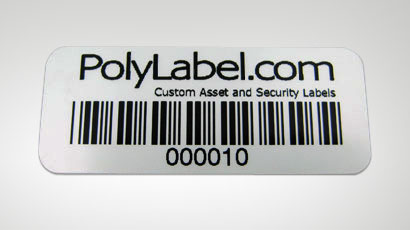
The Platinum face is metallic, which gives the label a substantial appearance suited to equipment where a paper-looking sticker would seem out of place.
What the checkerboard does that a plain label cannot
Tamper evidence only works if the evidence is obvious to someone who is not looking for it. A subtle change in adhesive residue means nothing to a technician walking past. A checkerboard pattern where a clean label used to be is unambiguous — no training required, no comparison against a reference photo, no judgement call.
That matters most in environments where the person who notices the tampering is not the person who owns the asset register. Maintenance staff, contractors, delivery personnel and security rounds all become useful observers when the evidence explains itself.
Where Platinum fits
Specify it for capital equipment, machinery, instrumentation and asset-facing hardware where you want both tamper indication and a finish that reads as permanent. It suits assets that are seen by clients, inspectors or the public, and populations where a metallic tag signals that the equipment is managed and monitored.
It is also a sensible choice for mixed programmes: a metallic tamper-evident label on high-value items and a standard white label on everything else gives you an immediately visible tier system across the estate.
Barcodes: Platinum yes, Chrome no
This is the decision that most often goes wrong when specifying PolyCheck, so it is worth being direct about.
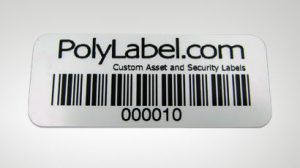
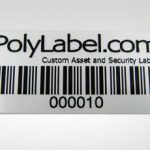
PolyCheck Platinum can carry barcodes and serialized numbering. PolyCheck Chrome should not be used with barcodes — its high reflective surface interferes with scanning.
Platinum’s metallic face is still more reflective than a white one, so if barcodes are central to your programme and scanning happens under direct overhead lighting or at awkward angles, order samples and test them against your own scanners before committing. Where scanning reliability outweighs appearance entirely, PolyAsset White is the safer face — though it carries no tamper evidence.
How it compares to the other tamper-evident options
PolyCheck leaves a checkerboard pattern and offers a metallic finish. Choose it when you want tamper indication that also looks like a piece of permanent asset identification.
PolyVoid leaves the word VOID on both the asset and the label. Choose it when the evidence has to be legible as evidence — chain of custody, sealed enclosures, anything a third party will inspect.
PolyBreak destroys itself into fragments. Choose it when preventing tag transfer is the entire objective and nothing needs to be proved afterwards.
Ordering
Size, quantity and numbering are configured above. Labels can carry your logo, custom text and serialized numbering, and layout proofs are emailed for approval before production.
For a mixed estate, tell us which asset categories need tamper evidence and which do not — most programmes apply it selectively rather than across everything, and the cost difference over a few thousand tags is worth planning for.
Request samples and test both the checkerboard behaviour on your own surfaces and the scanning performance under your own lighting before ordering a full run.
Additional information
| Weight | N/A |
|---|---|
| Quantity | 250, 500, 1000, 2000, 3000, 5000 |
| Label Size | 1 x 2, 3/4 x 1-7/8, 5/8 x 1-3/8, 1/2 x 1 |
| Numbering | Human Readable Numbering BELOW Barcode, Human Readable Numbering ABOVE Barcode, Barcode ONLY (no numbering), Numbering ONLY (no barcode), None (no barcode, no numbering |