
 Types of Barcodes
Barcodes is a way of representing data in a visual machine-readable form. Think of them as a way of transferring strings of characters. These strings can carry all kinds of information. The information is then encrypted in barcode languages known as symbology’s, which is then transferred to a computer from a scanner. Here are the various types of barcodes and what they can do for you:
Code 39 Barcode
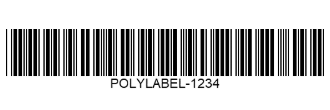 This is a very old barcode, one of the oldest around. It is also a common symbology found in health care, electronics and government. This barcode uses a lineal 1D, alphanumeric code that includes the whole 128 ASCII character set and can extend to any length. Its only limit is the size of the label. This would be a good choice if you want to keep track of inventory.
Interleaved 2 of 5 Barcode
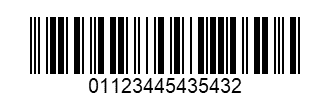 This is commonly found in distribution, manufacturing, and warehouses. It is a numeric-only barcode that helps to encode number pairs. In this symbology, every two digits are interleaved to make one symbol. For this format to work, the number of digits used has to be even. Therefore, a zero is normally added at the end of a set of odd numbers to produce an even number of digits.
PDF 417 barcode
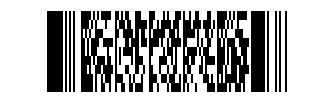 This is a linear stacked 2D barcode that is used in identification cards like a driver’s license. It has advanced capabilities like being able to encode links over a data file. For this reason, it is the standard chosen by the Department of Homeland Security and the USPS. It can also be expansive in size.
Universal Product Code (UPC) barcode
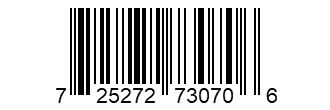 This type of code is printed on almost all retail products. It consists of a machine-readable barcode and a unique 12-digit number. It was initially made for tracking inventory and quick receipt printing. It is mostly used in identifying a particular product in retail industries.
International Article Number (EAN)
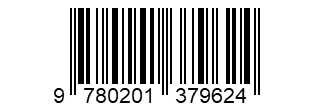 These are regarded as a superset of the UPC. They are used by libraries, wholesalers, booksellers, and universities to trace books. EAN is a 13 digit codes made from the International Standard Book Numbers (ISBN) for every single book. They are standardized like UPCs to enable specific identification of publishers.
Code 128 Barcode
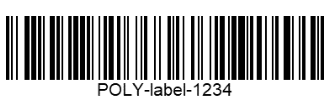 This is a compact barcode used in packaging and shipping applications all over the world. It is derived from the ASCII 128-character set (0-9, a-z, A-Z, and some special characters). It also features an automatic switching set that lets you optimize its length.
QR Code-Quick Response
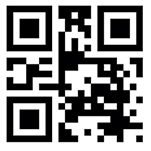 QR codes are the latest in the barcoding world and are getting very popular due to its fast readability and greater storage capacity. They often contain data that points to a website or application. A Quick Response (QR) Code can be read by any digital device that stores data. It consists of a matrix of black squares arranged on a white background. They are used as marketing tools to store information on websites. You would usually find them on advertising materials or storefronts.
Please feel free to contact PolyLabel.com to discuss the various types of barcodes we offer. We can be reached directly at 1-519-743-3422 or use our Label Request form.
Our Best Sellers
-
-
-
-
-
-
-
 PolyAsset White Destructible
PolyBreak White Destructible
$135.00 – $495.00Select optionsQuick View -
-
-
-
-